

The District Councils’ Network has responded to the Government announcement that county and district councils can apply to ministers to postpone elections scheduled for 2026.
In places where the Secretary of State agrees to postpone, elections will instead be held in 2027 for new shadow unitary authorities, which are due to formally assume power one year later.
This means that councillors in affected councils last elected in 2022 will remain in post until 2028 when their council disappears – or potentially even longer if the timetable for local government reorganisation slips.
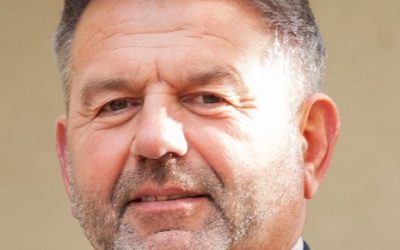
Cllr Richard Wright, Chair of the District Councils’ Network, said:
“England’s local democracy is built around every councillor being elected for a four-year term, a cycle which should be broken only in the most exceptional circumstances.
“Local government reorganisation means that many councils will soon cease to exist and legitimate questions can be asked about whether the electoral cycle should be adapted in response.
“However, the Government has fallen into a pattern of failing to anticipate obvious issues with how council reorganisation impacts on local democracy, making promises on the timing of elections that cannot be fulfilled and then changing policy at the last minute.
“Electoral officers are operating in a climate of uncertainty, which wastes time and money – for instance when venues have to be booked for election counts that don’t take pace.
“Most seriously, the electorate will be understandably confused by the constant shifting of the goalposts and broken promises. This has the potential to undermine faith in our cherished local democracy.”